Dreamworks’ ‘Kung Fu Panda’ Sequel – ‘The Secrets of the Furious Five’: Conceptually Operating ‘Behind Enemy Lines’ and High Profiling the
Custodian Chief’s Lab Monkey Status and Historic Quantum
© 2009 Brad Kempo B.A. LL.B.
Barrister & Solicitor
The first in the sequel was heavily geo-politicized and has been nominated for a 2009 Geo award. Its successor, while much shorter in length, still demonstrates that the uber-geo-political genius triumvirate of Spielberg, Geffen and Kratzenberg was at work during inception, production and post-production.
There’s been an exceptional amount of ‘cognitive emancipation’ that’s come with first contact with the world’s movers and shakers in the spring of 2003. And that sensation of being imminently emancipated geographically from a multi-decade hellhole of hypnosis experimentation, torture and deprivation on all levels persisted throughout the coming years. It was especially so whenever the coalition high profiled what he had essentially become to the Chinada High Command and its street soldier community; merely a “thing”, a chattel, to be experientially manipulated, cognitively brutalized and physically beaten up whenever they felt like it. The feeling of having attained justice when they are imprisoned or living the ‘dumpster-diver lifestyle’ will almost be indescribable after so long living a nihilism-generating nightmare.
Once again the coalition elevated his Canadian persona to international condemnation heights. ‘The Secrets of the Furious Five’ is a compilation of three explicit geo-circumstances. “Secrets” refers to coalition confidentiality (1, 2, 3, 4, 5, 6, 7, 8, 9), allowing the partnership to achieve its stated objectives unhindered by the baggage that comes with publicity. The adjective “furious” describes how livid the coalition and its Canadian representative are about what was done to him, the threat Chinada poses worldwide and the lack of capitulation amongst its principals who believe they are invincible, insulated and immune. And “five” is a compensation ratifier – the lexiconic constituent symbolizing his historic damages for being a lab monkey (1, 2, 3, 4, 5, 6, 7, 8, 9, 10) – a two-decade victim of enslaving human experimentation and having been regularly tortured with its product.

Secrets of the Furious Five is an Annie Award winning animated short produced by DreamWorks Animation which serves as a semi-sequel to the animated feature film Kung Fu Panda.
The film is about Po the Dragon Warrior (in computer animation) telling the stories of his comrades in arms, to kung fu students. The only actors from the movie to reprise their roles in this short were Jack Black as Po, Dustin Hoffman as Master Shifu, David Cross as Crane, and Randall Duk Kim as Master Oogway. Angelina Jolie, Lucy Liu, Jackie Chan and Seth Rogen do not reprise their roles mainly due to the fact their related characters are depicted as their younger selves.
Po is assigned by Master Shifu to teach an introduction to Kung Fu class for a group of rambunctious rabbit children. Fortunately for Po, it does not take him long to bring the class to order and for the children to calm down, and begins to emphasize to the kids that combat is not the only part of what Kung Fu is about, while its true meaning is "Excellence of Self". To illustrate his point, he uses the stories of the Furious Five's individual pasts and the basic philosophical concepts they learned that enabled them to be great Kung Fu masters.
Mantis
In his youth, Mantis was a petulantly impatient warrior who was prone to jumping to conclusions and making impulsive decisions. When this habit gets himself captured, the long wait he was forced to endure in his cage allowed him to find the patience to play dead long enough to ambush his captors.
Viper
Viper, the daughter of Great Master Viper, was born without venomous fangs. Her father, who relied on his venomous bite (referred to as his "Poison Fang Technique"), was despondent she could never succeed him as a warrior, making her feel timid. However, when she grew older, her father encountered a bandit who wore armor hard enough to shatter his fangs when he tried to bite him. Seeing her father in peril, Viper found the courage to fight the bandit and defeat him with her ribbon dancing skills.
Crane
Crane was a janitor of a martial arts school until the star pupil, Mei Ling, encouraged him to try seek enrolment in the school. Although his nerve failed him at the try-outs, he accidentally found himself in the intimidating challenge that determined eligibility. Suddenly, he found the confidence to take the challenge and his skinny body proved to be an asset that enabled him to succeed.
Tigress
Tigress was an orphan whose status as an apex predator and her destructive lack of control of her strength and temper left her feared and isolated with no hope of anything better. Master Shifu came to kindly teach her the discipline she desperately needed to control her movements until she could perform delicate tasks with ease enough to allay the concerns of the orphanage and the children that lived there. When she was again rejected for adoption by the adults who still feared her, Master Shifu took her in as his student and foster daughter.
Monkey
Monkey was a troublemaker who tormented his village owing to him being publicly humiliated in his youth. He defied all attempts to force him to leave until Master Oogway confronted and defeated him, but also deduced the cause of his anti-social behavior. Rather than making him leave the village as per the challenge, Oogway tells him to stay and encourages him to show compassion to others, as he would want in similar circumstances.
Conclusion
At the end, Shifu returns to see Po's anticipated lack of progress teaching and is surprised he underestimated Po's talents yet again considering how much the panda's students have learned. But when the bunnies ask Po how his first day of Kung Fu was, all the unpleasant memories during the original film flash through his head; he says it was "totally awesome."
Source: wikipedia.com
Kratzenberg et al. adhere to standard lexiconic protocol by embedding the lexicon as soon as the Triple “E” production begins. In this instance it’s in the form of the size of the class Po is instructed by Shinfu to teach and the nature of his students. The chosen animal for his of kung fu apprentices is the bunny – drawing on Jay Leno’s contribution to the confidential language viz. his comedy sketch that represents Canada’s constitutionally and internationally delegitimized political leader, and which threatened to knock his teeth out for failing to capitulate to coalition demands after winning the January 2006 election. The April 7, 2006 comedy sketch has been repeatedly employed. For a full transcript see Just How Livid Coalition Partners Are Their Reasonable Demands Were Met with Arrogant Belligerence – A Retrospective on the Use of Coercive Diplomacy (Part II). The first observation of his students is of 5 of them playing with a punching bag mock-up of Po. This is another articulation of the coalition’s decision that the Canadian government is liable to the Custodian Chief’s damages.

The next observation of the class, when Po is trying to get their attention to begin the instructional, is 8. And when they finally assemble to hear the first lecture there are 12; and moments later another there are 14.

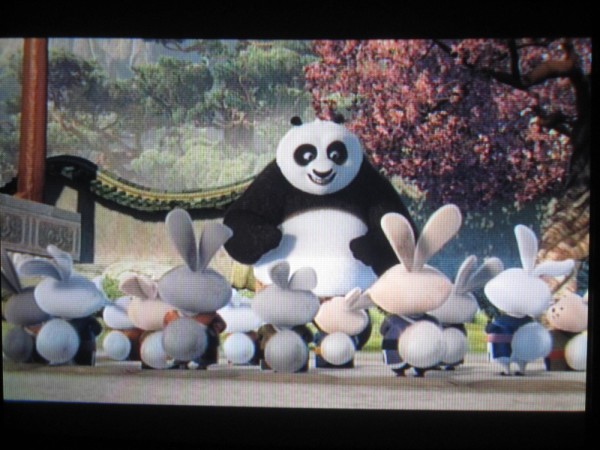
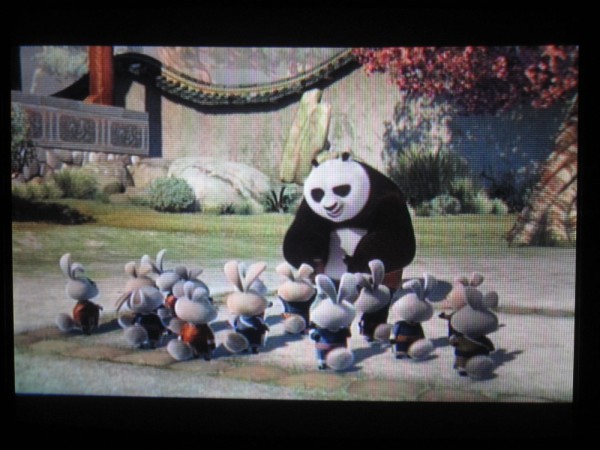
The dialogue that begins the class incorporates another instance of servicing the Custodian Chief’s international persona:
Student #1: Aren’t we going to fight?
Student #2: Yea, like the Furious Five.
All Students: Yea.
Po: The Furious Five? [Erin M.] They are cool, aren’t they?

The lesson then begins with Po describing Mantis; beginning with “He was the hero of the valley. But he had one tiny problem: He’s totally impatient.” Producers script him to be sitting at a table with chopsticks in hand demanding service from a waiter. In the background are two sets of animals. On his left are two ducks and on his right are three bunnies; making a total of five.
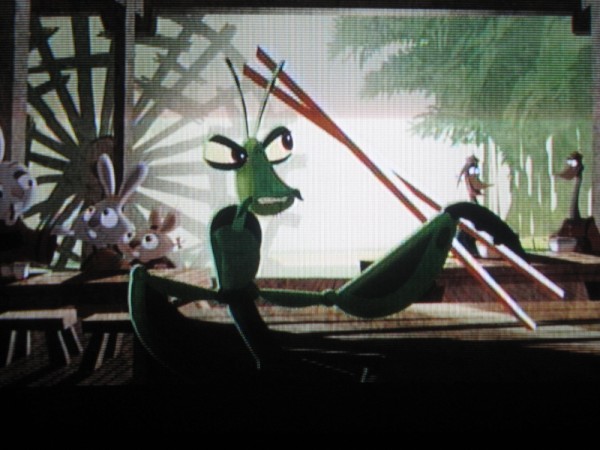
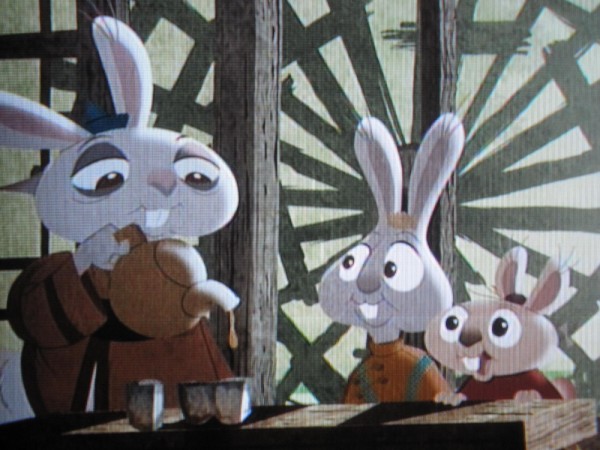
He is approached by a sheep who complains that a group of crocodiles stole the village’s supply of wool coats. He valiantly undertakes to retrieve them but is so impatient he launches the rescue before the sheep can warn him that a trap has been set by the bandits for anyone who tries to compound.
Sure enough, when Mantis reaches the village he gets caught and caged. Producers geo-script a representation of the Chinada malfeasant being imprisoned by arranging three crocs to take credit for his capture.
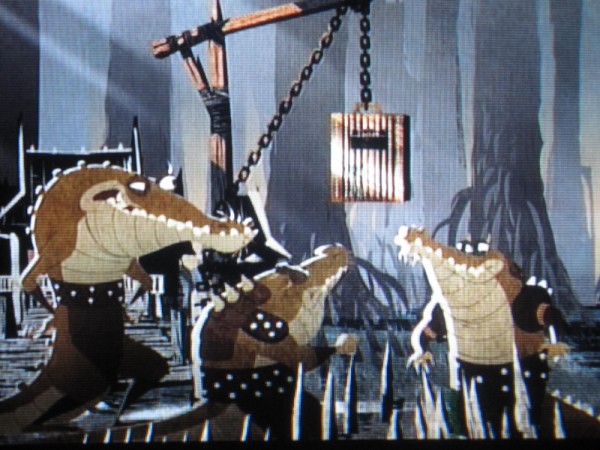
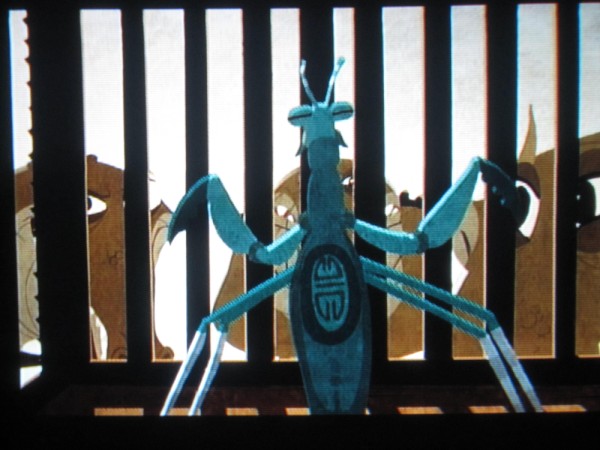
One of them says “I guess you were so fast you forgot to check for traps”, which is an articulation of how the Chinada High Command has been in such a rush to achieve its various nefarious objectives its principals lost sight of the fact the coalition has been working to arrange their own set of traps to bring an end to their domination of Canada and their global hegemony operation.
While in captivity he is forced to learn patience, which serves him well; for he plays dead causing the crocs to open the cage to remove what they thought was a corpse. That’s when he springs into action and with his kung fu skills immobilizes the thieves and takes possession of the wool coats.
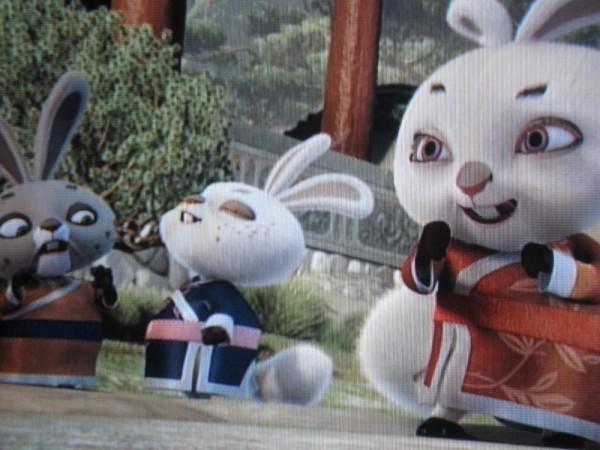
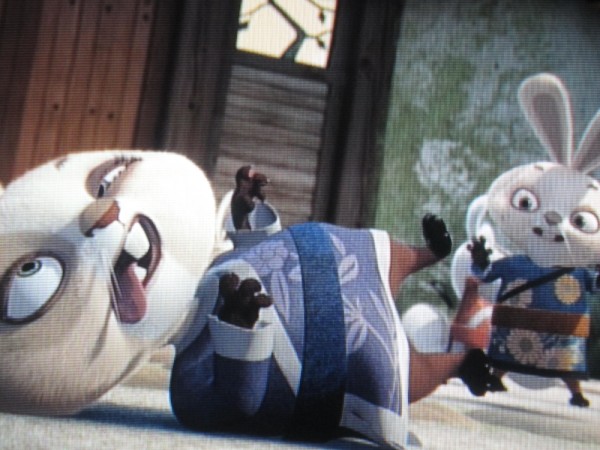
Students begin to imitate Mantis’ achievement. One student repeats his patient attitude (total of three bunnies in scene) and then producers depict the knockout blow they are in the process of delivering by showing another student mimicking how Mantis played dead.
The story about Viper is next; which begins with Po describing him as the “greatest of his fabled clan”. Producers then show his nemeses to be an assemblage of 14 warrior gorillas – a combination of lab monkey metaphor and compensation ratifier.

The snake was born without venom and thereby didn’t have the same capabilities of disarming assailants like his parents. So he had to learn another skill that would take its place. In a scene showing the father defending the village against invaders, he engages the enemy, all of whom he fells. Producers arrange for him to defeat eight adversaries to draw attention to what China has become to the West and the imminent success of the partnership viz. the 21st century’s first encounter with imperialistic totalitarianism.

As Viper grows up he learns the art of ribbon dancing; which becomes indispensable when the village is attacked by a big gorilla – a way of depicting the development, use and proliferation of stealth cognition technologies. As father is walking through the town the invader appears and presents a danger. The invader is scripted to drop his massive foot right in front of father Viper; and in doing so eliminates the view of one of the townsfolk – an elder bunny. The image that’s created is of this animal, representative of Canada’ delegitimized political leader, being squashed.
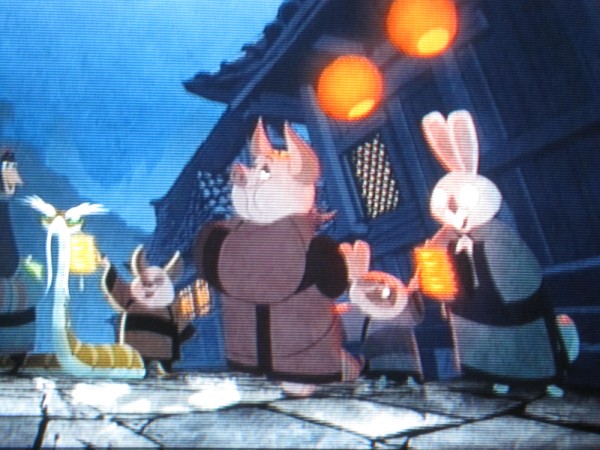
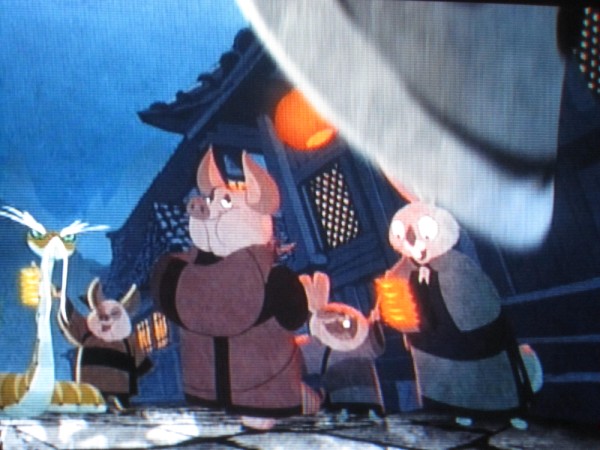
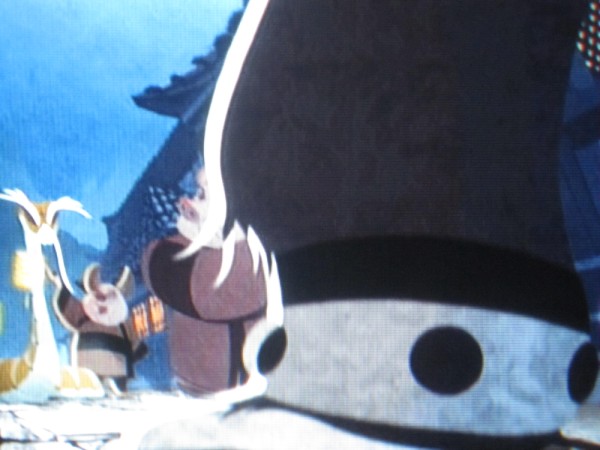
Producers seek to articulate how the ‘former’ Canadian Prime Minister gets flattened by the coalition for being complicit in the institutionalization and militarization of Chinada’s Article 7 violation, perpetuating militarized totalitarianism and helping advance the global hegemony operation. Father Viper’s poisonous fangs are no match for the bandit’s armour and his son comes to the rescue, using his dancing ribbons to subdue the thief.

Then Crane is introduced to the student body, producers begin the scene with the front of a Chinese temple. There are five characters of the Asian language and observed concomitant with Po’s dialogue: “Twenty years ago the best students from all of China studied…”. This links the Custodian Chief’s two decades being a human experimentation victim with the Beijing leadership’s liability for damages.

The story about Tigress begins with Po describing her living in an orphanage. The facility had a terrible secret. In its walls there is a ferocious monster who nobody can tame. So it had to be kept locked up. Producers design the door to its cell with the lexicon in mind. From the outside it had the constituents of prison certainty and a coalition identifier and compensation ratifier.

To Po’s voiceover “the orphanage needed some help” there’s a close up of the door, highlighting a coalition identifier; which is producers’ way of articulating how humanity needed to be saved from the menace that is the Chinada High Command and the partnership was created to do just that.

Shinfu arrives to adopt Tigress and then sets out to train her in the ways of kung fu. One of his refined capabilities is the art of balance; and he’s depicted balancing five dominoes – producers way of drawing attention to the Fiefdom treatise prediction that China with Canada’s complicitous assistance has militarized wealth and with it “seeks to buy, bribe and seduce its way dominoes-style to a measure of global presence that puts the gains made by democracy in the twentieth century in serious peril” and how that wealth is going to be seized to force the malfeasant into insolvency and transferred to the Custodian Chief, some of which constitutes his damages.

When Shifu finally decides to adopt Tigress, Po gets emotional about it. The students find this funny and all begin to laugh.
Po: You think that’s funny, do ya?
All Students: Yea.
Po: Well, I guess it’s easier to laugh at someone than have someone laugh at you. Let me tell you about monkey.
Producers, as would be expected, go to greater lengths geo-politicizing the segment on Monkey, given what the animal represents in the diplomatic corridor. It begins with this specially crafted dialogue, describing the malicious schadenfreude joy extracted out of the Custodian Chief’s twenty-year enslavement and torture.
Immediately thereafter the lexicon is aggressively employed. The scene opens with an elderly bunny walking the streets of the village as monkey is bouncing from rooftop to rooftop. This juxtaposes the current legitimate head of Canada's government with the delegitimzed head.

Po adds the following to describe the simian: “Three words: B – A – D, bad”. Concomitant with this coalition identifier, monkey has grabbed a handful of bananas from a vendor’s fruit stand, squishes them so the bananas fly high in the air and after gravity does its thing they land in his mouth. There are a total of five bananas. Po then corrects himself with “I guess [bad is] one word; three letters”. The juxtaposition of the lab monkey metaphor with two coalition identifiers and one compensation ratifier is another instance where the partnership has guaranteed its assurance damages are forthcoming.
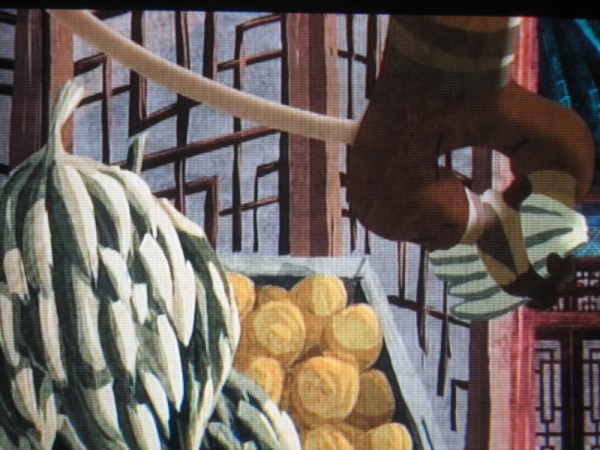
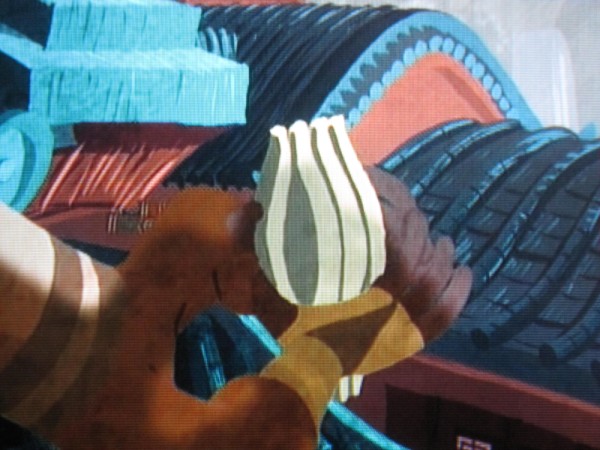
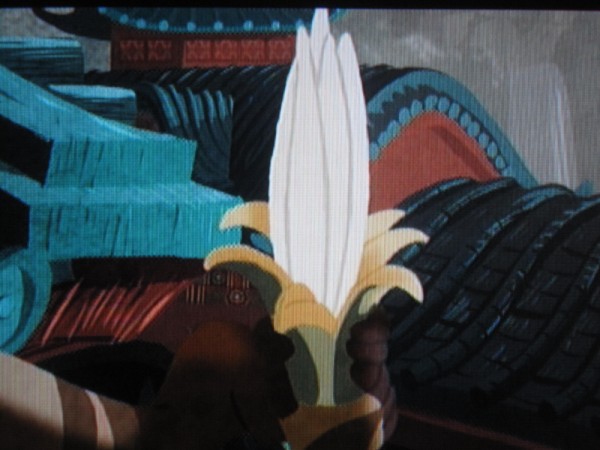

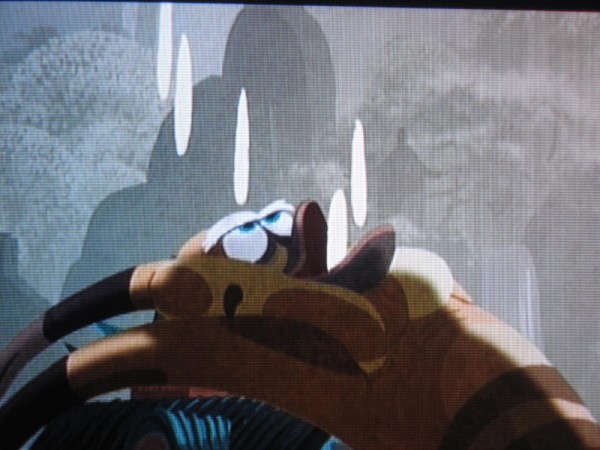

The villagers are upset with Monkey and demand he leave. Producers arrange for five townsfolk to insist he depart.

With the number five representative of the Custodian Chief, they are articulating his insistence that China’s military and intelligence personnel, who began, advanced and protected institutionalized and militarized experimentation, vacate Canada. Since he (they) won’t go voluntarily an enforcer is called in. The ox is attired in prison certainty.

But since the simian is skilled in the ways of kung fu he is able to thwart his forced removal not only by the oxen, but also by all the others. With a prison certainty backdrop the evictors are observed to lose their pants. This is producers’ way of describing the power the Custodian Chief has with coalition assistance in getting rid of the unwelcome. The parallel to losing their pants is losing their shirts, i.e., everything the Chinada malfeasant have, including their assets and freedom.
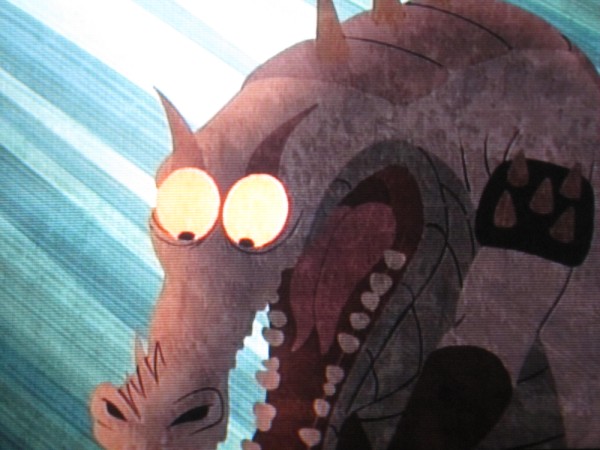
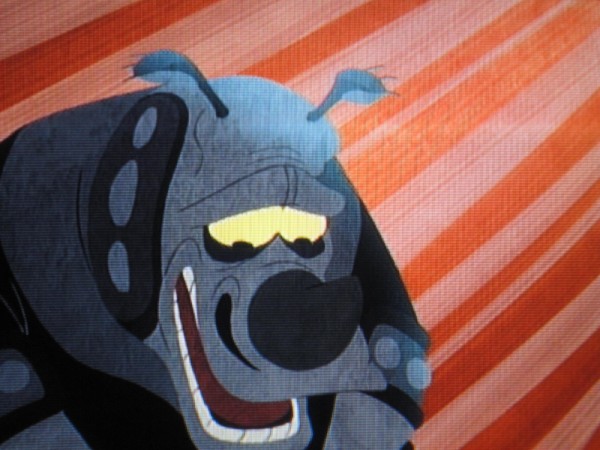
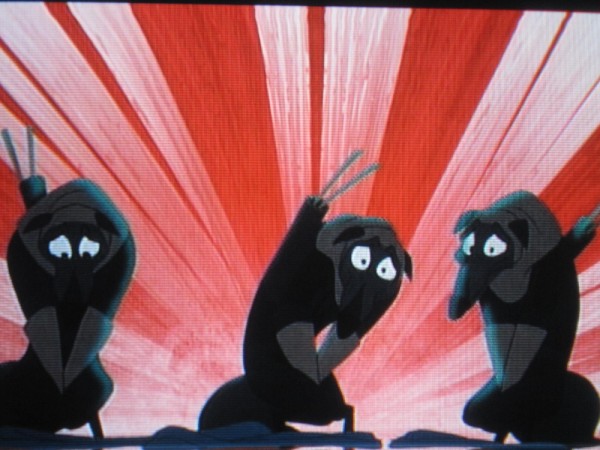
Having exhausted the use of all security forces, the villagers call in Master Oogway, the turtle whose skill in the martial arts is unsurpassed; and he defeats Monkey easily. This leads the simian to realize the error of his ways, saying to him “you saved me”. The great turtle answers with “Monkey, you have shown me great skill, but I also sense in you great pain”. Producers then initiate a flashback, beginning with a close-up of him when he was young. He’s attired in the colors of China.
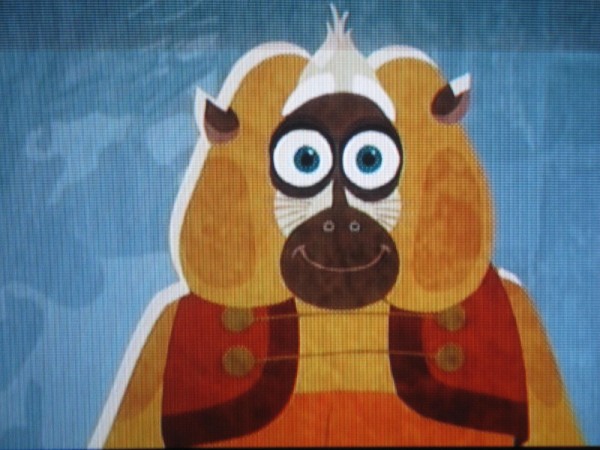
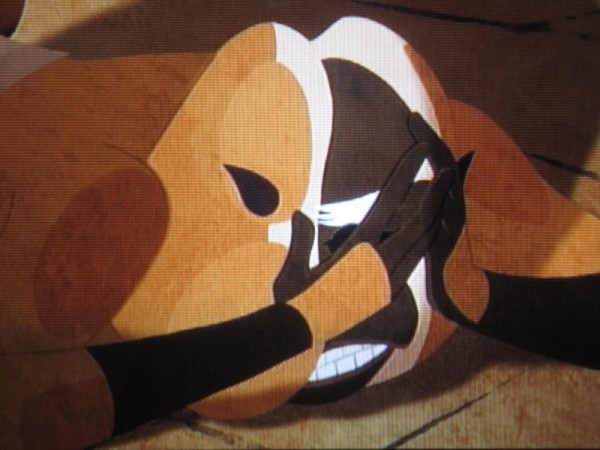
This high profiles (i) the Custodian Chief’s flawless competence advancing coalition interests and (ii) the pain, suffering and loss he experienced for such a long time as a result of what he became to the China-Canada military alliance. The great Kung Fu Master ends with “stay [here and] use your skills for good”, geo-referring to the development of the Canadian’s abilities through coalition efforts to address the country’s dysfuctionalities.
